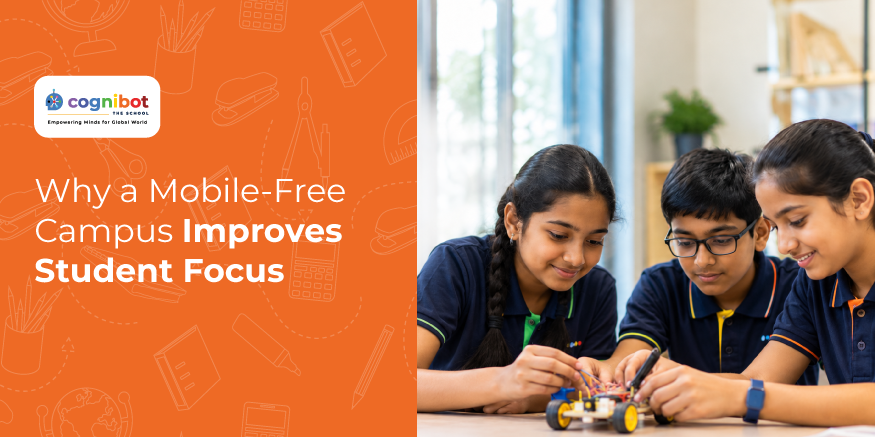
Why a Mobile-Free Campus Improves Student Focus
Mobile phones have become a part of everyday life. From staying in touch with family to watching videos and playing games, children are exposed to screens from an early age. While technology can be useful for learning, using mobile phones during school hours can sometimes distract students from their studies, classroom activities, and friendships.
This is why many schools are considering a mobile-free school environment. By limiting personal mobile phone use during school hours, schools can help students pay more attention in class, take part in activities, and build better learning habits.
A mobile-free environment is not just about keeping phones away. It is about helping children make the most of their time at school, both inside and outside the classroom.
How Do Mobile Phones Affect Student Focus?
Students need time and attention to understand lessons, complete tasks, and interact with their teachers. However, notifications, messages, games, and social media can easily interrupt their concentration.
Even when a student is not actively using a phone, the thought of checking a message or notification can take their attention away from the lesson.
Here are some ways mobile phones can affect learning:
- Frequent distractions: Notifications and messages can interrupt classroom learning.
- Reduced participation: Students may pay more attention to their screens than to discussions and activities.
- Difficulty concentrating: Switching between lessons and phone content can make it harder to stay focused on one task.
- Less face-to-face interaction: Spending breaks on phones may reduce conversations and opportunities to make friends.
- Poor time management: Unnecessary phone use can take attention away from assignments and other school responsibilities.
These challenges show why schools need clear guidelines around phone use. A well-planned mobile-free environment can help students stay engaged with their learning and the people around them.
5 Benefits of No Mobile Phones in School
There are several benefits of no mobile phones in school, especially when students have more opportunities to learn, interact, and participate without digital distractions.
1. Better Attention in the Classroom
When students do not have personal phones competing for their attention, they can focus more easily on their teachers and lessons.
They can listen carefully, ask questions, and follow classroom discussions without being interrupted by messages or notifications. This can also help teachers maintain a more focused learning environment.
A mobile-free campus gives students more time to concentrate on what is happening in the classroom instead of thinking about what they might be missing on their phones.
2. Improved Learning Habits
Good learning habits develop through regular practice. Students need to listen, read, ask questions, solve problems, and complete their work without constant interruptions.
Reducing phone use during school hours encourages children to stay with a task until they finish it. Over time, this can help them develop better concentration, time management, and self-discipline.
These habits are useful not just for schoolwork but also for future studies and everyday responsibilities.
3. More Face-to-Face Interaction
School is also a place where children learn to communicate, share ideas, and build friendships.
When students spend less time on their phones during breaks, they have more opportunities to talk to classmates, play games, and participate in group activities.
These everyday interactions help children practice listening, expressing their thoughts, and understanding different points of view. They also make school a more engaging social experience.
4. Greater Participation in Activities
Learning does not happen only through textbooks. Group projects, sports, debates, art, and classroom discussions help students explore their interests and develop new skills.
When phones are not a distraction, students may be more willing to participate in these activities and work with their classmates.
They get more opportunities to ask questions, share ideas, and learn through experience. This supports their overall development alongside academic learning.
5. A More Balanced Relationship with Technology
Technology is useful when it serves a clear purpose. However, children also need to learn when to use it and when to put it aside.
A mobile-free school helps establish a clear boundary between learning time and personal screen time. It can encourage students to be more mindful of their phone habits and understand the importance of using technology responsibly.
The aim is not to suggest that phones are always harmful. Instead, it is to help children understand that different situations require different levels of attention.
How Mobile-Free Schools Improve Student Focus
A phone restriction alone cannot guarantee better academic performance. Students also need supportive teachers, engaging lessons, and an environment where they feel comfortable asking questions.
However, clear phone-use rules can remove one common source of distraction.
Here is how schools can make a difference:
- Set clear rules: Explain when personal phones are allowed and how they should be stored during school hours.
- Make lessons engaging: Use discussions, practical activities, and group tasks to encourage participation.
- Encourage outdoor play: Give students opportunities to move, play, and interact during breaks.
- Promote classroom discussions: Encourage children to ask questions, share opinions, and learn from one another.
- Teach responsible technology use: Help students understand the value of screen breaks and focused learning.
When these practices work together, schools can create an environment that supports better student focus in school without relying on phone restrictions alone.
Why Cognibot Can Be a Good Choice for Focused Learning
Choosing a school is about finding an environment that supports your child's academic progress, confidence, and overall development. Parents may want to consider how a school's approach to technology, classroom learning, and student engagement fits their child's needs.
Cognibot can be considered by families exploring learning environments that prioritize students' attention and participation. A mobile-free approach, when supported by engaging lessons and meaningful activities, can help children spend more time learning, interacting with classmates, and developing important life skills.
For parents considering Cognibot, it is worth asking about its mobile phone policy, classroom practices, use of technology for educational purposes, and opportunities for students to participate beyond textbooks. These details can help families understand how the learning environment supports concentration and responsible technology use.
The best choice is one where students are encouraged to stay curious, take part in learning, and develop habits that support them both inside and outside the classroom.
How Parents Can Support a Mobile-Free School Environment
At Cognibot The School, the no-phone policy helps keep students focused on learning, classroom activities, and spending time with their friends without unnecessary distractions. Parents can support this approach by setting screen-time limits at home, encouraging reading and outdoor play, and helping children understand when and where phone use is appropriate.
Parents can also talk to their children about the benefits of spending school hours away from screens. If a child needs to contact their family during the school day, parents can follow the school's communication and emergency procedures for support.
When parents and schools work together, children can gradually build healthier screen habits and make more time for learning, friendships, and activities beyond their phones.
Final Thoughts
A mobile-free school environment can help reduce distractions and give students more opportunities to concentrate, participate in classroom activities, and build friendships. While phone restrictions alone cannot solve every learning challenge, they can be a useful step towards creating a more focused and engaging school day.
The goal is not to keep children away from technology completely. It is to help them understand when technology is useful and when their attention is better spent on learning and real-world interactions.
For parents exploring schools, understanding the approach to phone use, teaching methods, and student activities can help them make an informed decision. A supportive learning environment can help children build the focus, confidence, and habits they need for the future.
FAQ
1. What is a mobile-free school?
A mobile-free school is one that restricts or does not allow students to use personal mobile phones during specified school hours or activities. The exact rules depend on the school's policy.
2. What are the main benefits of no mobile phones in school?
The benefits can include fewer digital distractions, better classroom participation, more face-to-face interaction, and opportunities to develop stronger learning habits.
3. How does a mobile-free campus improve student focus?
By reducing interruptions from messages, notifications, and social media, a mobile-free campus can help students pay more attention to lessons, discussions, and classroom activities.
4. Does a mobile-free school mean students cannot use technology for learning?
No. A restriction on personal phones does not necessarily mean a school avoids educational technology. Schools may use teacher-guided digital tools and other learning resources when appropriate.
5. What should parents look for when choosing a mobile-free school?
Parents should ask about the phone policy, emergency communication procedures, classroom teaching methods, extracurricular activities, and how the school helps students develop responsible technology habits.