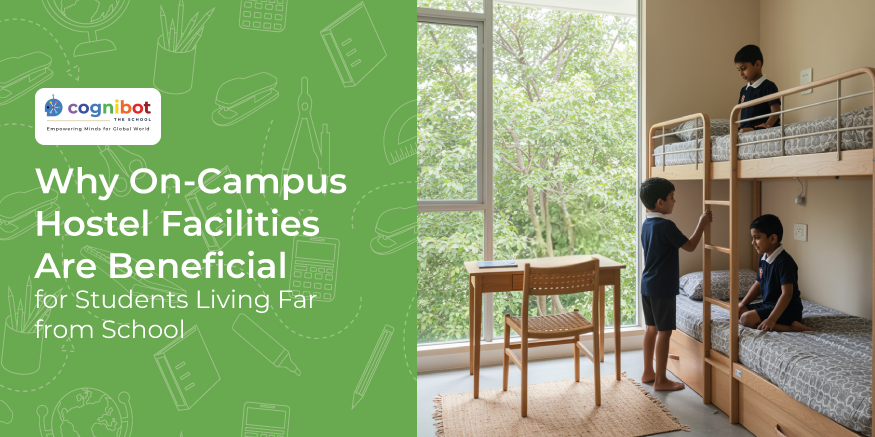
Why On-Campus Hostel Facilities Are Beneficial for Students Living Far from School
For many families, finding the right school is not only about academic quality but also about suitability, safety, and their children's holistic development. Parents who live far from school regularly struggle with daily trips, late-evening schedules, and their children's general well-being. In this context, on-campus hostel facilities for students can be an essential solution.
There are numerous educational institutions that provide quality education, but Cognibot combines a beneficial environment and a global curriculum with holistic care for its residential students. For guardians seeking boarding schools in Patancheru, an on-campus residential experience might be more convenient for learners.
In this article, we will examine the key benefits of on-campus hostels, why they are ideal for students living far away, and what parents should consider when choosing residential schools in Patancheru.
1. Reduced Travel Time, Increased Learning Time
One of the biggest challenges for students who live far from school is the exhausting daily commute. Travelling long distances not only consumes time but also drains a child's energy and enthusiasm. With school hostel facilities in Patancheru, students can significantly reduce this daily burden.
Students in residential campuses can save several hours each day, which they can use for academic work, exercise, games, or relaxation. This healthy balance helps students concentrate in class and gives them more time to participate in school activities. For parents, it also provides assurance that their kids don't spend hours travelling each day.
2. Organized Routine and Discipline
An organised hostel environment helps students develop discipline and maintain an organised daily routine. Consistent wake-up times, study periods, meal times, and recreational activities give students structure and routine.
At Cognibot, the hostel system aligns with the school calendar, helping students balance their time between academics and other activities. Over time, this structured environment can help students develop self-discipline, independence, and time-management skills, which are valuable throughout their academic journey.
3. Academic Support Beyond School Hours
A hostel is more than a place to stay; it can also provide academic support beyond regular school hours. A well-managed residential programme can provide students with academic guidance beyond regular school hours.
This approach is especially useful for students following demanding academic programmes such as the Cambridge and CBSE curricula. With proper supervision and committed study hours, residential students can maintain a steady academic routine while accessing guidance when needed.
4. Holistic Development Through Extracurricular Activities
One of the benefits of living in a hostel is the opportunity to participate in a wider range of extracurricular activities. Hostel life can help students to explore and develop their interests in sports, music, arts, drama, debate, and other activities.
Students do not have to worry about after-school traffic or travelling home late in the evening, as they live on campus. This allows them to make better use of their time and participate in activities that contribute to their overall development.
For parents exploring residential school facilities, access to academics, sports, recreation, and other activities within the same campus can be an important consideration.
Also Read: The Importance of Holistic Education in Child Development
5. Development of Independence and Responsibility
For many young learners, living in a hostel is their first step towards greater independence. Hostel life teaches students to take responsibility for their daily routines, manage their personal belongings, and develop decision-making skills.
Unlike at home, where parents may handle many everyday responsibilities, a structured residential environment gradually encourages children to become more self-reliant. These experiences can help students become more confident and prepared for future academic and personal responsibilities.
6. Social Skills and Lifelong Friendships
The opportunity to live and study with students from different backgrounds is one of the valuable aspects of hostel life. This experience can encourage communication, cooperation, understanding, and cultural awareness.
An on-campus hostel can provide an encouraging setting in which students build friendships and develop stronger social connections. These relationships can make their school experience more enriching while providing a sense of community during their formative years.
7. Safe, Secure, and Supervised Environment
A child's safety is an important consideration for parents, especially when the child lives away from home. A well-maintained school hostel can provide a controlled and supervised environment designed around students' daily needs.
When evaluating schools with hostel facilities in Hyderabad, parents can consider supervision, security arrangements, pastoral care, accommodation, and emergency support. These aspects may help create a residential environment in which students are comfortable and supported while living away from their families.
8. Healthy Food and Lifestyle Habits
A healthy lifestyle is an important part of a student's overall development. Nutritious meals, frequent physical activity, adequate rest, and healthy routines can contribute to students' physical and mental well-being.
Cognibot follows specific nutritional and lifestyle practices for its students. Its approach to healthy eating and regular sports and fitness activities can help residential students maintain a balanced daily routine.
For families comparing residential school facilities, it helps to understand how the school approaches nutrition, physical activity, recreation, and students' overall well-being.
9. Digital Discipline: No Smartphone Policy
Another aspect of residential school life is maintaining a healthy balance between technology and everyday activities. Excessive smartphone use can interfere with concentration, sleep, social interaction, and academic routines.
Cognibot follows a no-smartphone policy for students. By limiting smartphone access, the school aims to encourage students to focus on academics, activities, in-person interactions, and meaningful peer relationships.
For students living away from home, clear technology guidelines can also help create a more structured residential environment.
10. Preparation for Future Challenges
Managing academics, personal responsibilities, and social activities can help students become more confident, adaptable, and strong individuals.
At Cognibot, residential students experience a combination of Cambridge and CBSE curricula along with programmes such as SMAART and SAMPOORNATHA. This broader approach supports academic learning while also focusing on life skills, values, and personal development.
For parents considering schools with hostel facilities in Patancheru, these considerations can be important when evaluating whether a residential learning environment is suitable for their child.
Conclusion
For students who travel long distances to school, an on-campus hostel can be more than a place to stay. It can provide a structured environment that supports their academic, personal, and social development while reducing the challenges associated with long daily commutes.
For families exploring school hostel facilities in Patancheru, Cognibot offers a residential environment that supports students through academics, extracurricular activities, healthy routines, and supervised campus life.
With its combination of Cambridge and CBSE curricula, along with programmes focused on holistic development, Cognibot provides students with a setting where learning goes beyond the classroom.