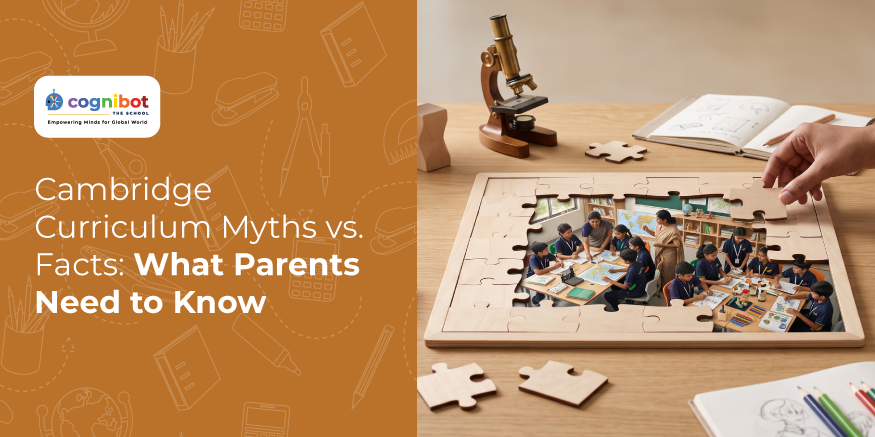
Cambridge Curriculum Myths vs. Facts: What Parents Need to Know
Choosing a curriculum is a major decision for parents when picking a school. As more families in Hyderabad look at international schools, the Cambridge curriculum is becoming more popular. Still, some common misconceptions can make this choice confusing.
Some parents think it is only for children who want to study abroad. Others feel it is too hard or not right for Indian students. In truth, these are just myths.
Knowing the real facts can help you make a better decision and find a school that fits your child's needs.
Myth 1: The Cambridge Curriculum Is Only for Students Who Want to Study Abroad
Fact:
This is a common misunderstanding. The Cambridge curriculum is accepted by universities worldwide, but it is not just for students who plan to study abroad.
It helps children build strong academic knowledge and important skills like critical thinking, communication, creativity, and problem-solving. These skills are useful whether a student studies in India or another country.
The curriculum prepares children for life, not just for a particular destination.
Instead of asking students to memorise facts, it focuses on understanding ideas and using them in real situations.
Children are encouraged to:
- Ask questions.
- Explore different ideas.
- Solve problems independently.
- Take part in discussions.
- Learn through projects and activities.
For many students, this makes learning more enjoyable because they know why they are learning something, not just memorising it for a test.
Myth 2: Cambridge Students Don't Perform Well Academically
Fact:
Strong academics are still the main focus of the Cambridge curriculum. The difference is that children are encouraged to really understand ideas instead of just memorising them.
This helps them:
- Build strong subject knowledge.
- Improve analytical thinking.
- Develop confidence in applying concepts.
- Perform well in assessments and future studies.
When children really understand what they learn, they often do better in school over time.
Myth 3: Cambridge Doesn't Suit Indian Students
Fact:
Many parents worry that an international curriculum might not fit Indian children. In fact, children adapt easily when learning is interesting and meaningful.
The Cambridge curriculum encourages curiosity, discussion, hands-on learning, and independent thinking. These qualities help every child, no matter where they live.
Today, many families in Hyderabad choose Cambridge International Schools because the curriculum offers strong academics and a balanced way of learning.
Myth 4: It's Only About Academics
Fact:
One of the biggest strengths of the Cambridge curriculum is its focus on the overall growth of each child. Besides academics, students build important life skills that help them in the future.
- Leadership
- Critical thinking
- Confidence
- Problem-solving
Students develop these skills through class discussions, projects, presentations, group work, and hands-on learning.
This balanced approach helps children become good learners and also grow into confident, responsible people.
Learning That Makes Children Curious
Children learn best when they enjoy learning. In Cambridge classrooms, asking questions is encouraged, mistakes are seen as chances to learn, and curiosity is part of daily life.
Instead of just finishing lessons, children are encouraged to explore ideas, link what they learn to real life, and think for themselves. This makes learning less stressful and more meaningful.
Next, we will look at more common myths about the Cambridge curriculum, what parents should consider when choosing a school, and how Cognibot brings the Cambridge approach to life with engaging, child-focused education.
Myth 5: Cambridge Doesn't Prepare Students for the Future
Fact:
The world is changing fast, and children need more than just academic knowledge to succeed. They also need skills like adaptability, communication, teamwork, and independent thinking.
The Cambridge curriculum helps students build these skills along with strong subject knowledge. By encouraging critical thinking, asking questions, and problem-solving, it prepares them for further studies, future jobs, and daily life.
Myth 6: Parents can't be Involved in Their Child's Learning
Fact:
Some parents think an international curriculum might be hard to understand or support at home, but the Cambridge approach encourages regular communication between schools and families.
Parents stay involved by:
- Understanding their child's progress.
- Supporting learning at home.
- Encouraging curiosity and discussion.
- Working closely with teachers.
When schools and parents work together, children get a more supportive learning experience.
What Should Parents Look for in a Cambridge School?
Picking the right school is just as important as choosing the right curriculum. When looking for a Cambridge school in Hyderabad, look beyond the campus and facilities. Take time to understand how children learn every day.
Some important questions to ask include:
- Are teachers experienced in the Cambridge curriculum?
- Does the school encourage curiosity and independent thinking?
- Are students given opportunities for sports, arts, and leadership?
- Is learning practical and activity-based?
- Does the school focus on both academics and overall development?
The answers to these questions will help you understand the school's learning environment better.
How Cognibot Brings the Cambridge Curriculum to Life
A curriculum works best when it is taught well.
At Cognibot, we focus on creating classrooms where children feel confident to ask questions, share ideas, and enjoy learning. Lessons help students understand concepts instead of just memorising them, making learning engaging and meaningful.
Along with strong academics, children build communication skills, creativity, teamwork, and confidence through hands-on activities and group learning. This balanced approach helps them become independent learners ready for the future.
For parents who want a Cambridge curriculum school that values both academics and overall growth, Cognibot offers a caring place where every child can learn, explore, and grow at their own pace.
Final Thoughts
Many beliefs about the Cambridge curriculum are just myths. In fact, it offers a balanced mix of strong academics, practical learning, critical thinking, creativity, and overall growth.
As more parents look for the best Cambridge schools in Hyderabad, it is important to look past common myths and focus on what matters most: your child's happiness, confidence, and growth. At Cognibot, the Cambridge curriculum comes alive through engaging teaching, personal attention, and a supportive environment that helps every child build the knowledge, skills, and confidence they need to succeed in school and beyond.
FAQ
What are the 4 types of curriculum?
The four commonly followed school curricula are CBSE, ICSE, Cambridge, and IB (International Baccalaureate). Each offers a different approach to learning and suits different student needs and goals.
Is the Cambridge curriculum the hardest?
Not necessarily. The Cambridge curriculum focuses on understanding concepts, critical thinking, and applying knowledge rather than memorising information. Many students find it engaging because learning is more practical and interactive.
What are the 5 attributes of Cambridge learners?
Cambridge learners are encouraged to be:
- Confident in working with ideas and expressing themselves.
- Responsible towards themselves and others.
- Reflective about their learning and experiences.
- Innovative in solving problems and exploring new ideas.
- Engage with the world around them.
What makes Cambridge's curriculum unique?
The Cambridge curriculum combines strong academics with practical learning. It encourages curiosity, independent thinking, creativity, communication, and problem-solving, helping children develop the skills they need for both higher education and everyday life.