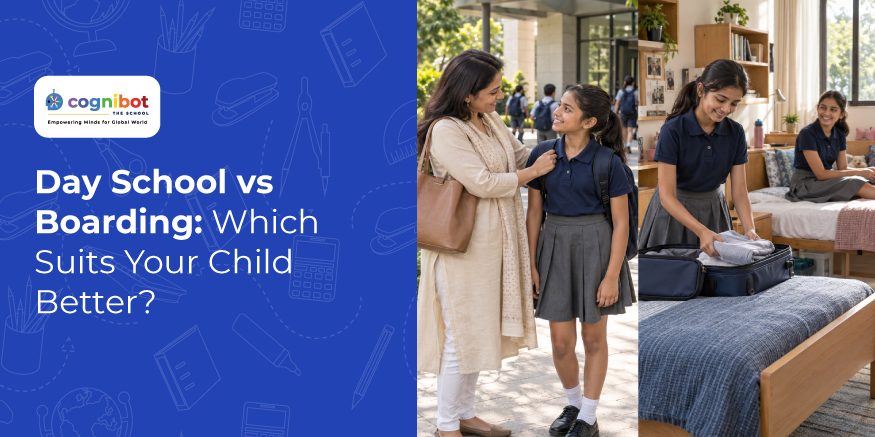
Day School vs Boarding: Which Suits Your Child Better?
Choosing a school is about more than academics. Parents also need to think about their child's routine, independence, comfort, interests and the kind of learning environment they are likely to enjoy.
This is why the boarding school vs day school decision can be difficult. Both options have their own advantages, and there is no single answer that works for every child.
A day school allows children to return home after classes, while a boarding school combines education with residential living. Understanding the difference between day school and boarding school can help parents make a choice based on their child's needs rather than simply choosing what is more popular.
What Is a Day School?
A day school is a school where students attend classes during regular school hours and return home after the school day.
Children usually follow a routine that includes school, homework, extracurricular activities and family time. Parents remain closely involved in their child's daily routine and education.
For families who live reasonably close to the school, a day school can offer a comfortable balance between education and home life.
What Is a Boarding School?
A boarding school provides both education and accommodation. Students live on or near the school campus during the academic term and usually return home during scheduled holidays or breaks.
The school becomes an important part of their daily life. Along with classes, students follow routines for meals, study time, sports, activities and rest.
Boarding schools can be particularly useful for families who live far from good educational institutions or prefer a more structured residential environment.
Boarding School vs Day School: Understanding the Difference
The main difference between day school and boarding school is where the child spends their time outside classroom hours.
| Day School | Boarding School |
|---|---|
| Students return home after school | Students live on or near the campus |
| More daily family interaction | Greater independence from home |
| Home and school routines are separate | Learning and residential life are combined |
| Parents are closely involved in daily routines | Students manage more aspects of daily life |
| Suitable for families living near school | Useful for families living farther away |
| Home-based study and activities | Structured campus-based routine |
Neither option is automatically better. The right choice depends on the child's personality, family situation and educational priorities.
Benefits of Day School
There are several benefits of day school, especially for children who enjoy spending more time with their families.
1. Strong Family Connection
One of the biggest advantages is regular family interaction. Children can return home after school, share their experiences and spend time with parents and siblings.
This can be especially important for younger children who may still need a familiar home environment.
2. Familiar Daily Routine
Day school allows children to maintain a clear separation between school and home. After completing school activities, they can relax in a familiar environment.
For some children, this routine can make it easier to manage school responsibilities without feeling overwhelmed.
3. More Parental Involvement
Parents can stay closely involved in homework, hobbies, meals, sleep schedules and other parts of the child's routine.
They can also quickly notice when their child needs additional academic or emotional support.
4. Flexibility After School
Children attending day schools may have more flexibility to participate in activities outside school, such as music classes, sports coaching or other interests.
However, parents should ensure that the schedule does not become too crowded.
Benefits of Boarding School
The benefits of boarding school are different and often relate to independence, routine and residential learning.
1. Builds Independence
Living away from home encourages children to take greater responsibility for everyday tasks.
They may learn to organise their belongings, manage their time, follow schedules and make decisions independently.
These experiences can gradually prepare them for higher education and life beyond school.
2. Structured Daily Routine
Boarding schools usually have a structured routine that includes classes, meals, study periods, activities and rest.
For some students, having a predictable schedule can help them develop better time-management habits.
3. More Opportunities for Peer Interaction
Since students live together, they have more opportunities to interact with classmates outside the classroom.
They can learn to cooperate, communicate and handle different personalities while participating in shared activities.
4. Convenient for Families Living Far Away
For families who live far from a suitable school, boarding can reduce the stress associated with long daily commutes.
Cognibot – The School, for example, has published information about on-campus hostel facilities for students who live far from school. Its residential offering is described as an option for boys, combining accommodation with its broader academic and student-development approach.
Which Children May Benefit From a Day School?
Day school may be a good fit for children who:
- Enjoy spending significant time with their families
- Prefer familiar surroundings
- Are comfortable travelling to school every day
- Have strong family support at home
- Want to pursue activities outside school hours
- Are still young and benefit from being close to parents
This does not mean day school is only suitable for younger children. Older students can also thrive in a day-school environment.
Which Children May Benefit From Boarding School?
Boarding may suit children who:
- Are comfortable spending time away from home
- Show an interest in becoming more independent
- Enjoy group activities and social interaction
- Can follow structured routines
- Live far away from their preferred school
- Are ready to take greater responsibility for their daily routines
Parents should remember that readiness matters more than age alone. A child who is academically capable may still need more time before feeling comfortable living away from home.
Choosing Between Day School and Boarding School
When choosing between day school and boarding school, parents should look beyond the school building and curriculum.
Here are some important questions to consider.
What Does Your Child Prefer?
Talk to your child before making the decision.
Would they feel comfortable staying away from home? Do they enjoy group living? Or do they prefer returning home every day?
Their personality and comfort level should be part of the decision.
How Far Is the School?
Distance can have a major impact.
If the school is close to home, daily travel may be manageable. If the school is several hours away, boarding could be a practical option.
How Independent Is Your Child?
Boarding requires children to handle several aspects of their daily life with less direct parental supervision.
If a child is not ready for this, a day school may be more comfortable initially.
What Kind of Routine Does Your Child Need?
Some children respond well to a structured environment. Others perform better when they have more flexibility at home.
Understanding how your child learns and manages routines can help you make a better decision.
What Does the School Offer?
Parents should compare more than just the curriculum.
Look at:
- Teacher experience
- Class sizes
- Academic support
- Sports and extracurricular activities
- Laboratories and learning spaces
- Student safety
- Counselling and wellbeing support
- Food and accommodation, if boarding is involved
- Parent-school communication
- Overall school environment
Where Does Cognibot – The School Fit In?
When looking for the best school for children, parents should consider whether the school's approach matches their child's needs.
Cognibot – The School in Patancheru, Hyderabad, offers Cambridge and proposed CBSE pathways. Its Cambridge Curriculum is offered from Nursery to Grade 5, while the Proposed CBSE Curriculum is offered from Grades 6 to 10.
The school focuses on academic learning alongside future-ready skills. Its programmes include SMAART and Sampoornatha, with learning opportunities connected to areas such as AI, robotics and other emerging fields.
Cognibot also places emphasis on a mobile-free learning environment, extracurricular activities and purpose-built spaces such as science and mathematics labs, an AI lab, library, auditorium, music hall and sports facilities.
For parents considering residential education, Cognibot also provides on-campus hostel facilities for boys. This gives families another factor to consider when comparing a residential option with a traditional day-school routine.
Ultimately, the school should be evaluated based on what works for the child, rather than simply whether it is a day or boarding school.
Is Boarding Better Than Day School?
There is no universal answer.
A boarding school can provide independence, structured routines and a strong residential community. A day school can provide family connection, familiarity and greater parental involvement.
The better option is the one that fits the child's personality, age, learning style and family circumstances.
Parents should also remember that children can change over time. A child who prefers a day school today may become comfortable with residential education later.
Final Thoughts
The boarding school vs day school decision should not be treated as a competition between two types of education.
Both can provide strong academic and personal development opportunities when the school environment is supportive and well planned.
The key is to understand the difference between day school and boarding school, consider the benefits of boarding school and the benefits of day school, and then look at what your child actually needs.
Whether you are choosing between day school and boarding school, focus on the complete experience: academics, teachers, activities, safety, routines, independence and emotional wellbeing.
The best school for children is ultimately one where they feel supported, challenged and comfortable enough to learn and develop with confidence.
FAQ
1. What is the main difference between day school and boarding school?
Day-school students return home after classes, while boarding-school students live on or near the school campus during the academic term.
2. What are the main benefits of boarding school?
The benefits of boarding school can include greater independence, structured routines, peer interaction and easier access to education for students who live far from school.3. What are the benefits of day school?
The benefits of day school include regular family interaction, parental involvement, a familiar home environment and flexibility after school.
4. How should parents decide between day school and boarding school?
Parents should consider the child's age, personality, independence, preferences, school distance, family routine and the school's academic and residential facilities.5. Is boarding school better than day school?
Not necessarily. Both can work well. The right choice depends on the child's individual needs and the family's circumstances.