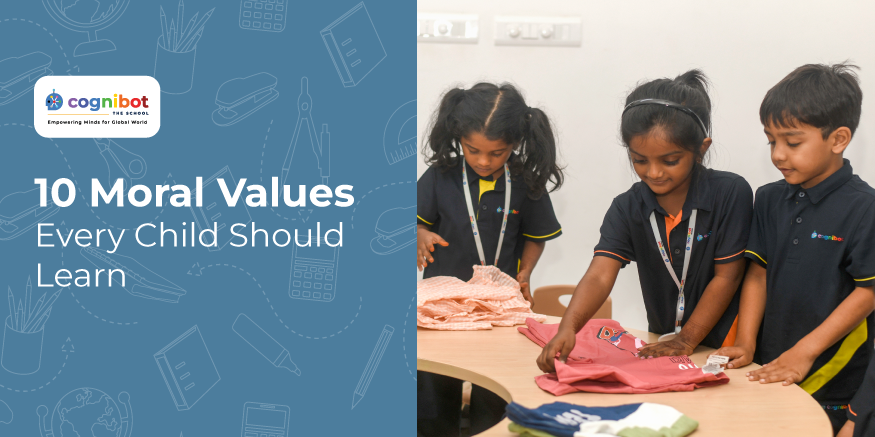
10 Moral Values Every Child Should Learn
Children learn many things at school, from reading and writing to maths and science. But education is not only about academic knowledge. Children also need to learn how to treat others, make good choices, handle difficult situations and take responsibility for their actions.
This is where moral education for kids becomes important. The values children learn in their early years can influence how they behave, communicate and make decisions as they grow. Parents and schools both play an important role in helping children understand and practise these values in everyday life.
Here are 10 moral values for kids that every child should learn.
1. Honesty
Honesty means telling the truth and being open about what happened, even when the truth may be uncomfortable.
Children should understand that making a mistake is not as serious as hiding it or blaming someone else. When children are encouraged to be honest, they learn to take responsibility for their actions and build trust with parents, teachers and friends.
Simple habits such as admitting a mistake, returning something that does not belong to them and telling the truth can help children understand the value of honesty.
2. Respect
Respect is one of the most important values children should learn. It means treating other people, their opinions, belongings and feelings with care.
Children can learn respect by listening when someone else is speaking, using polite language, following classroom rules and understanding that people may have different opinions.
Respect should not be limited to elders or teachers. Children should also learn to respect their classmates, school staff, friends and people from different backgrounds.
3. Kindness
Kindness does not always have to involve big gestures. Helping a classmate, sharing something, checking on a friend or simply using kind words can make a difference.
When children practise kindness regularly, they begin to understand how their actions can affect other people. Schools can encourage this through group activities, teamwork and simple acts of helping others.
Kindness also teaches children that success is not only about being the best. It is also about being a good person.
4. Responsibility
Responsibility means understanding that our actions have consequences and that we have certain duties to fulfil.
Children can learn responsibility through small everyday tasks. Keeping their books organised, completing homework, taking care of their belongings and helping with simple tasks at home are good starting points.
At school, giving children responsibilities such as managing classroom materials or taking part in group projects can also help them become more dependable.
5. Empathy
Empathy means trying to understand how another person may be feeling.
A child may not always agree with someone, but they can still learn to understand their feelings. For example, if a classmate is upset, children can learn to ask what is wrong instead of making fun of them.
Stories, role-play and classroom discussions can be useful ways of teaching empathy. These activities allow children to think about situations from another person's point of view.
6. Patience
Children naturally want things to happen quickly. Learning patience helps them understand that some things take time.
Whether it is waiting for their turn in a game, learning a difficult subject or working towards a goal, children need to understand that progress does not always happen immediately.
Parents and teachers can help by encouraging children to stay calm, keep trying and understand that waiting is sometimes necessary.
7. Sharing and Cooperation
Children spend a lot of time with others at school, making cooperation an important part of their development.
Sharing toys, working on group projects, taking turns and helping classmates teach children how to work with others. They also learn that they do not always have to get their own way.
Team sports, classroom projects, art activities and group discussions are simple ways to teach cooperation.
8. Gratitude
Gratitude means appreciating the people, opportunities and things we have.
Children can learn to say "thank you" and understand why it is important. But gratitude goes beyond using polite words. Children should also learn to appreciate the efforts of their parents, teachers, friends and other people who help them.
Simple conversations at home about what they are thankful for can help make gratitude a regular habit.
9. Fairness
Fairness teaches children to treat people equally and follow rules even when it may not benefit them.
For example, children can learn to take turns during games, follow the same rules as everyone else and avoid cheating to win.
Fairness also means understanding that everyone deserves to be heard and treated with respect. Learning this value can help children become better teammates, friends and members of their community.
10. Courage to Do the Right Thing
Courage is not only about being brave in difficult situations. For children, it can also mean having the confidence to do what is right.
A child may need courage to admit a mistake, stand up for a friend, say no to something wrong or ask for help when they need it.
Children should understand that doing the right thing is sometimes difficult, but it is still important. Encouraging them to make good choices instead of simply avoiding mistakes can help develop strong character.
How Schools Can Help Children Learn Moral Values
Moral values cannot be taught only through textbooks. Children learn them through everyday experiences, conversations and the way adults around them behave.
School activities, group projects, sports, storytelling, classroom discussions and community activities can give children opportunities to practise these values in real situations. Teachers can also help children understand why a particular behaviour is right or wrong instead of simply telling them what to do.
This makes moral education for kids more practical and easier for them to understand.
How Cognibot The School Supports Value-Based Learning
Parents looking for a school that focuses on academics as well as values can consider Cognibot The School. The school describes its approach as going beyond books and exams, with a focus on strong character, emotional intelligence, life skills and future readiness.
Cognibot's SAMPOORNATHA programme specifically focuses on areas such as wisdom, emotional resilience, family values, ethical understanding and conscious living. Its approach also includes discussions, reflection and real-life application rather than treating these lessons as something children simply memorise.
The school's wider TRISHUL framework also includes human skills such as confidence, communication, collaboration, critical thinking and conscious consumption. These skills complement the moral values children need as they grow and interact with the world around them.
For parents, this kind of approach can be useful because children get opportunities to learn not only what to study, but also how to think, behave and make responsible choices.
Final Thoughts
The 10 moral values for kids discussed above are simple, but they can have a lasting impact. Honesty, respect, kindness, responsibility, empathy, patience, cooperation, gratitude, fairness and courage can help children become more thoughtful and responsible individuals.
The goal is not to expect children to be perfect. It is to give them regular opportunities to understand these values, practise them and learn from their mistakes. With support from parents and schools, these everyday lessons can become a natural part of a child's life.
For parents, choosing a school that gives importance to both academics and character development can therefore be an important part of a child's education.
FAQ
1. What are 10 important moral values for children?
Some important values include honesty, kindness, respect, responsibility, empathy, patience, fairness, gratitude, cooperation and courage. These 10 moral values for kids can help children make better choices and build healthy relationships.
2. Why are moral values important for children?
Moral values for kids help children understand right and wrong and learn how their actions affect others. They also help children become responsible, respectful and caring individuals.
3. Why should children learn honesty and kindness?
Honesty teaches children to tell the truth and take responsibility for their actions. Kindness teaches them to care about others and treat people with respect. Both are important parts of moral education for kids.
4. How can children learn the importance of responsibility?
Children can learn responsibility through simple daily tasks such as completing homework, keeping their belongings organised, helping at home and taking care of classroom materials. Parents and teachers can also teach responsibility by giving children age-appropriate duties.
5. At what age should children start learning moral values?
Children can start learning moral values for kids from a very young age, even during their preschool years. Simple lessons about sharing, kindness, honesty and respect can help introduce the important values children should learn as they grow.