Role of Parent-Teacher Meetings in a Child’s Academic Growth
There is a moment many families recognise, even if they never say it out loud. A slip of paper comes home, a date is circled, or a short line mentions a parent-teacher meeting. It does not feel dramatic, but it carries weight. Something about sitting across from the person who sees a child for hours each day changes the way school feels at home. It turns learning into something shared, not just assigned and completed. These meetings are easy to dismiss as routine. They can feel rushed or awkward. Sometimes they feel unnecessary when grades look fine. Yet, when thinking about a child’s academic growth, it becomes hard to ignore how much meaning sits inside that quiet conversation.
What These Meetings Actually Feel Like
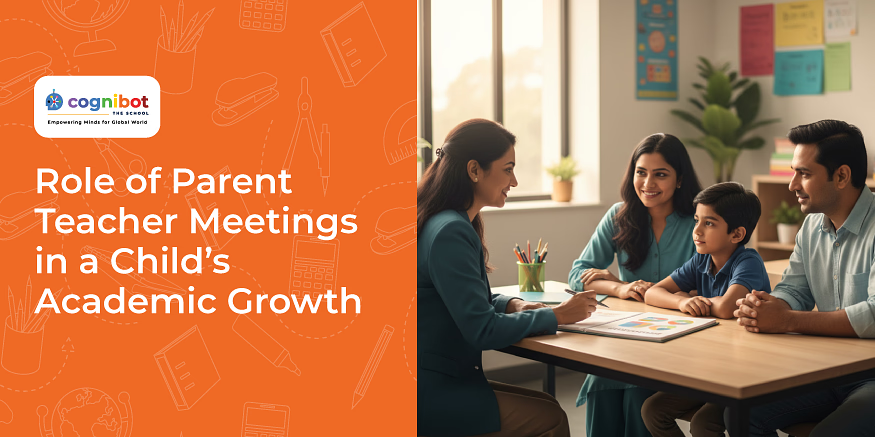
A parent meeting in school rarely unfolds as people imagine. There is no grand speech or final verdict on a child’s future. Often, it is just a chair pulled closer, a notebook opened, and a teacher trying to explain what has been noticed over time, like a child who hesitates before raising a hand, or a child who finishes quickly but drifts off. These small details that never show up on report cards. Parents often come with their own picture. Homework struggles at night, mornings that feel rushed, or questions about effort, focus, or confidence. When these two pictures meet, something useful happens. Not clarity all at once, but a better sense of where the child actually stands.
Listening Across The Table
The real value of a meeting often lies in the listening. Teachers talk, but they also listen. Parents speak, sometimes carefully, sometimes with worry showing through. The room becomes a place where assumptions get checked. A child who seems lazy at home may be overwhelmed in class. A child who appears confident at school may be quietly anxious at home. This exchange does not fix anything instantly. It shifts understanding. Academic growth is not only about learning more facts. It is about being seen properly. When adults around a child begin to share the same understanding, learning feels less confusing and less lonely. At Cognibot, we see parent–teacher meetings as meaningful conversations, not formalities. We use these moments to truly listen, align perspectives, and understand every child beyond grades and reports.
When Home And School Start To Line Up
Growth becomes steadier when expectations stop pulling in different directions. A teacher might expect independence, while a parent is still offering heavy guidance. Or a parent might value speed, while a teacher is watching for deeper thinking. These differences are not wrong. They are just unspoken until a meeting makes them visible. During a parent-teacher meeting (PTM) meeting in school, alignment begins quietly. Not through rules, but through agreement. The adults start using similar language. They notice the same habits. Over time, the child senses this. Instructions feel clearer, feedback feels more consistent, and progress becomes less about pressure and more about direction. At Cognibot, we believe real growth happens when home and school speak the same language. We work closely with parents to ensure consistency, clarity, and a shared vision for each child’s academic journey.
Small Signals Matter More Than Big Talks
Learning often isn’t based on a single major choice. It’s built incrementally from tiny hints that are recognised over time, like a teacher’s comment that a student resists group activities, or a parent’s report that a child talks extensively about one subject but avoids another. Sometimes hints are viewed as trivial, but they’re what drive further actions. If adults in the child’s life provide hints early, changes happen sooner, perhaps more encouragement in one spot and less emphasis in another or a slight variation in the explanation offered. These changes do not feel dramatic, but they shape how learning unfolds day by day.
Beyond Academics: Tracking Holistic Growth
At Cognibot, academic performance is only one part of a child’s development. Through our Sampoornatha framework, we focus on 10 essential life traits that shape long-term growth. These traits are assessed and documented every month.
Progress across these 10 dimensions is reflected in structured Panorama sheets that parents receive regularly. These sheets help families see how their child is growing in areas such as responsibility, collaboration, emotional awareness, and independent thinking.
During PTM at Cognibot, these Panorama sheets become a powerful discussion tool. Parents are able to track patterns, understand strengths, and identify areas where guidance may be needed. This makes meetings more purposeful and less limited to marks alone.The Child Is Always Watching
Children may not sit in the meeting, but they feel its outcome. They notice tone shifts at home. They hear comments like, “Your teacher said…” or “Let’s try it this way.” When adults speak about school with understanding rather than frustration, children feel safer making mistakes. There is also something powerful about knowing that adults talk to each other. It sends a quiet message that learning matters enough for people to show up and talk about it. That message often sticks longer than any advice.
When Meetings Are Missed Or Rushed
Not every meeting goes well. Some feel too short, some feel tense. Some do not happen at all. Life gets busy. Work schedules clash, and sometimes school feels intimidating. These realities matter. But when meetings are skipped repeatedly, small misunderstandings grow. A child’s struggles may be labelled incorrectly. Strengths may go unnoticed. Academic growth still happens, but it can feel uneven, as if something important is slightly out of reach.
Making Sense Of Why They Matter
The importance of PTM in school is not found in formal feedback or official records. It lives in shared awareness. When parents and teachers see the same child, not just the same grades, learning becomes more human. Academic growth stops being about performance alone and starts reflecting understanding, effort, and support. These meetings are not about fixing children. They are about adjusting the environment around them. When that environment becomes calmer and clearer, growth follows in its own quiet way.
Where Learning Expands Beyond Classrooms
At Cognibot, we believe education is not limited to textbooks or timetables. We have thoughtfully built a campus where learning flows into every space, from advanced science and AI labs to creative studios, sports arenas, and wellness zones. Our programs, including the proposed CBSE, Cambridge curriculum, our distinctive SMAART Program, and TRAYODA C, are designed to nurture curiosity, confidence, and real-world readiness. While SMAART builds scientific and technological thinking, TRAYODA C focuses on strengthening conceptual clarity and academic depth across core subjects.
Final Thoughts
Parent-teacher meetings rarely feel extraordinary while they are happening. They are simple conversations held in ordinary rooms. Yet, over time, their impact becomes visible. A child who feels understood, a home that reacts with patience, a school that teaches with context. The role of these meetings is not to control outcomes or guarantee success. It is to create a shared space where learning is noticed, talked about, and gently guided. That space, when visited regularly, gives a child something steady to grow from.