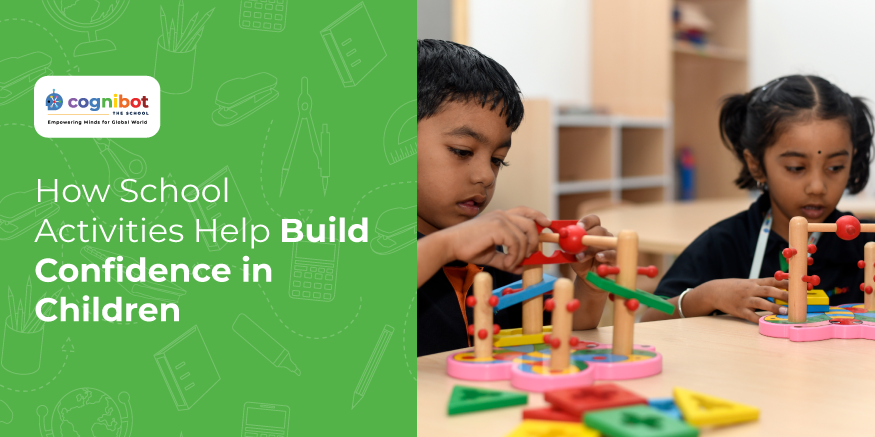
How School Activities Help Build Confidence in Children
Confidence plays an important role in a child’s school life. A confident child is more likely to ask questions, share ideas, try new things and take part in activities. Confidence does not develop overnight. It grows slowly when children get opportunities to try, make mistakes, learn and try again.
This is why school activities for children are an important part of education. Classroom lessons help children learn subjects, while activities give them opportunities to use what they learn, interact with others and discover their own strengths.
From sports and music to public speaking, art, projects and technology, different activities can help children become more comfortable with themselves and the world around them.
Why Is Confidence Important for Children?
Confidence helps children believe that they can handle new situations and challenges. It does not mean that a child will always know the right answer or never feel nervous. A confident child can still make mistakes or feel unsure, but is more willing to try.
For example, a child who is confident may:
- Raise their hand to answer a question
- Speak in front of classmates
- Try a new sport or activity
- Ask for help when needed
- Work with other children
- Share their ideas
- Handle mistakes without giving up quickly
- Take responsibility for small tasks
These habits can help children both inside and outside the classroom.
How School Activities Help Build Confidence
1. They Give Children Opportunities to Try New Things
Children may not know what they are good at until they get a chance to try different activities.
A child who finds academics difficult may discover that they are good at drawing, football, music, coding or storytelling. When children find an activity they enjoy, they get a chance to experience success in a different way.
Regular exposure to different school activities for children can therefore help them understand their own interests and abilities.
2. They Help Children Overcome Fear of Failure
Many children are afraid of making mistakes. They may avoid answering questions or participating because they worry about getting something wrong.
Activities provide a safe space to make mistakes and learn from them.
A child may miss a goal during a sports activity, forget a line during a play or make a mistake during a presentation. With encouragement, they learn that making a mistake does not mean they have failed.
This is an important part of building confidence in children.
3. Sports Teach Children to Keep Trying
Sports are one of the simplest activities to build confidence in kids.
Children learn to practise, follow rules, work with teammates and deal with both wins and losses. They also learn that improvement takes time.
For example, a child may not be able to run fast or play a particular sport well at first. With regular practice, they may slowly improve. Seeing this progress can make children believe that they can get better when they put in effort.
4. Public Speaking Builds Communication Skills
Speaking in front of others can be difficult for many children.
Activities such as debates, storytelling, presentations, speeches and role-plays can help children become more comfortable expressing themselves.
The first presentation may make a child nervous. But after doing it several times, they may become more comfortable standing in front of a group and sharing their thoughts.
These experiences can help children communicate more confidently as they grow.
5. Art and Creative Activities Encourage Self-Expression
Not every child is comfortable expressing themselves through words.
Art, music, dance, drama and creative projects give children different ways to express their thoughts and feelings.
There is often no single correct answer in creative activities. This gives children the freedom to explore ideas and make their own choices.
When teachers appreciate their effort and creativity, children learn to value their own ideas.
6. Group Activities Teach Children to Work With Others
Confidence is not only about speaking in front of a crowd. It also includes being comfortable working with other people.
Group projects and team activities teach children how to:
- Share ideas
- Listen to others
- Take responsibility
- Solve problems together
- Respect different opinions
- Support their teammates
A child who learns to contribute to a group can gradually become more comfortable interacting with others.
This shows how school activities and child development are closely connected.
7. Leadership Activities Help Children Take Responsibility
Small leadership opportunities can have a big impact on a child's confidence.
Schools can give children responsibilities such as leading a group project, helping organise an activity, representing their class or taking part in school events.
These experiences teach children how to make decisions, communicate with others and take responsibility for their actions.
They also help children understand that their contribution matters.
8. Competitions Teach Children How to Handle Challenges
Competitions can help children understand how to deal with pressure in a healthy way.
Whether it is a quiz, sports competition, art contest or public speaking event, children learn to prepare, participate and handle different outcomes.
Winning can make children happy, but losing can also teach them valuable lessons. With the right support from teachers and parents, children can learn that their result does not define their ability.
The goal should be to encourage effort and improvement rather than putting too much pressure on winning.
How Technology-Based Activities Can Support Confidence
Technology can be a useful part of a child’s learning when it is used in the right way. It gives students opportunities to explore new ideas, work on projects, ask questions and learn through hands-on experiences. Activities such as coding, digital storytelling, presentations, research projects and creative technology tasks can help children take an active role in their learning.
This is where a school like Cognibot can offer a different learning experience. We focus on combining education with technology and activities that encourage children to explore, think, create and learn independently. When students get opportunities to work on technology-based projects and solve problems on their own, they can gradually become more comfortable sharing ideas, trying new things and learning from mistakes.
Technology, however, works best when it supports classroom learning rather than replacing teachers or real-world interaction. At Cognibot, technology can be part of a broader learning environment where students continue to learn through teachers, activities, collaboration and practical experiences.
For parents looking for a school that brings together academics, activities and technology, Cognibot The School can be a good option to consider. A learning environment that uses technology with a clear purpose can help children build not just digital skills, but also confidence, curiosity and independence.
The Role of Teachers in Building Confidence
Activities alone cannot build confidence. The way teachers respond to children also matters.
Teachers can help by:
- Appreciating effort
- Giving children opportunities to participate
- Allowing them to make mistakes
- Listening to their ideas
- Encouraging questions
- Giving constructive feedback
- Giving quieter children opportunities to participate
- Avoiding unnecessary comparisons
A child who feels heard and supported is more likely to participate and try new things.
Parents Can Support Confidence Too
Confidence-building should not stop when children leave school.
Parents can support their children by encouraging them to take part in activities they enjoy. They should focus on effort and progress rather than only results.
Instead of saying, "Why didn't you win?" parents can ask:
"What did you enjoy?"
"What did you learn?"
"What would you like to try next time?"
Simple conversations like these can help children see challenges as learning opportunities.
Parents should also avoid comparing children with their classmates or siblings. Every child develops confidence at their own pace.
Choosing the Right Activities for Your Child
There is no single activity that will work for every child. Some children may enjoy sports, while others may prefer music, art, science projects, theatre or technology.
The goal is to give children enough opportunities to explore different areas.
Good school activities for children should allow them to participate, make choices, work with others and learn without feeling constant pressure to perform.
A balanced mix of academic, creative, physical, social and technology-based activities can give children different ways to discover their strengths.
Final Thoughts
Confidence is built through small experiences. A child who gets the chance to speak, perform, play, create, lead, solve problems and work with others gradually becomes more comfortable taking on new challenges.
This is why school activities and child development should go hand in hand. Education is not only about marks and examinations. Children also need opportunities to discover what they can do and learn how to handle both success and mistakes.
The right activities to build confidence in kids can help children become more willing to participate, communicate and try new things.
A school that combines strong academics with sports, creative activities, teamwork, leadership opportunities and thoughtful use of technology.
FAQ
1. How to build a child's confidence at school?
Children can build confidence when they get opportunities to participate, share their ideas and take responsibility. School activities for children such as presentations, sports, group projects and competitions can help them overcome fear, try new things and feel proud of their efforts.
2. What activities can help build confidence in children?
Activities like sports, public speaking, art, music, drama, group projects and classroom presentations can support building confidence in children. These activities encourage children to express themselves, work with others and learn from mistakes.
3. What are some activities that can help students build confidence?
Simple activities such as storytelling, role-play, debates, team games, quizzes, creative projects and presentations can help students become more comfortable speaking and participating. These are useful activities to build confidence in kids because they give children regular chances to practise new skills.
4. What activities boost confidence?
Activities that allow children to try, create, perform or solve problems can boost confidence. Sports, dance, music, art, public speaking, coding and team activities can help children discover their strengths and become more confident.
5. Why is it important for children to participate in school activities?
Taking part in activities helps children develop communication, teamwork, problem-solving and leadership skills. School activities and child development are closely connected because children learn important skills outside regular classroom lessons while becoming more confident and independent.